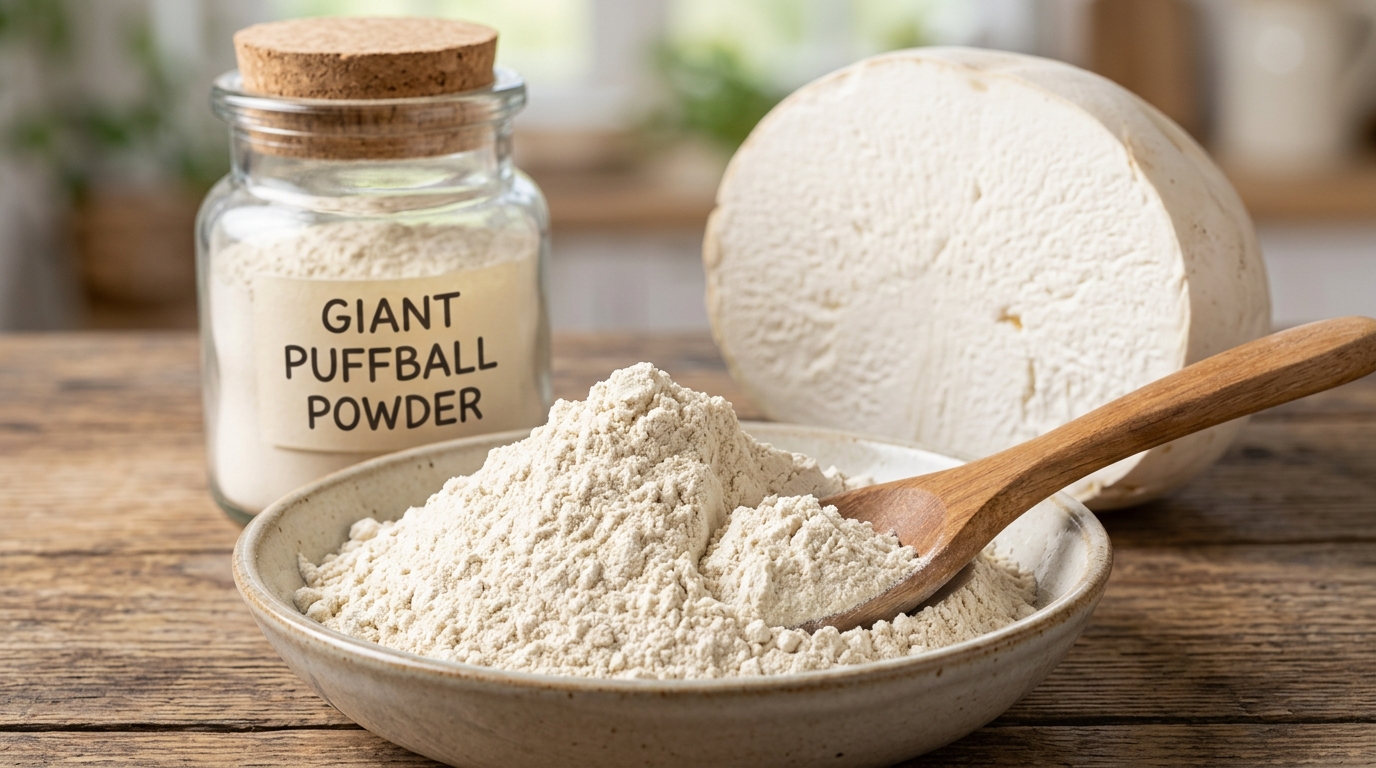
Giant Puffball (Mushroom) Spore Powder
Acute surface bleeding, epistaxis (nosebleeds), abrasions
Region
Circumpolar Arctic, North America, Europe
Tradition
Inuit, Native North American & European folk traditions
Era
Ancient battlefield first aid
Science
Yes
Today
Rare Today
Instructions
Traditional logic
Dry earthy dust clogs life-fluid flow and binds flesh
Background & history
FACT-CHECK: fully verified for Native American (Lakota, Blackfoot, Ojibwe and others) and European use, including the medieval-battlefield first-aid role; the hemostatic effect is confirmed by modern analysis of the fungus's fibrin-promoting properties.
Where it comes from
Circumpolar Arctic, North America, Europe
Community notes
Loading notes…
This is a historical and cultural reference, not medical advice. Many of these remedies have never been scientifically validated, and folk reasoning (humoral theory, “hot/cold” classifications, spiritual causation) reflects older explanatory traditions rather than modern medicine. Ratings reflect community opinion, not clinical evidence.
Related remedies for Acute surface bleeding, epistaxis (nosebleeds), abrasions
Honey for Wounds & Burns
Open wounds, burns, skin ulcers
Egypt · Mesopotamia
Aloe Vera
Burns, wounds, skin irritation, constipation
Africa · Arabian Peninsula
Moldy Bread / Mold Poultice
Infected wounds
Egypt · Australia · Central Asia · France