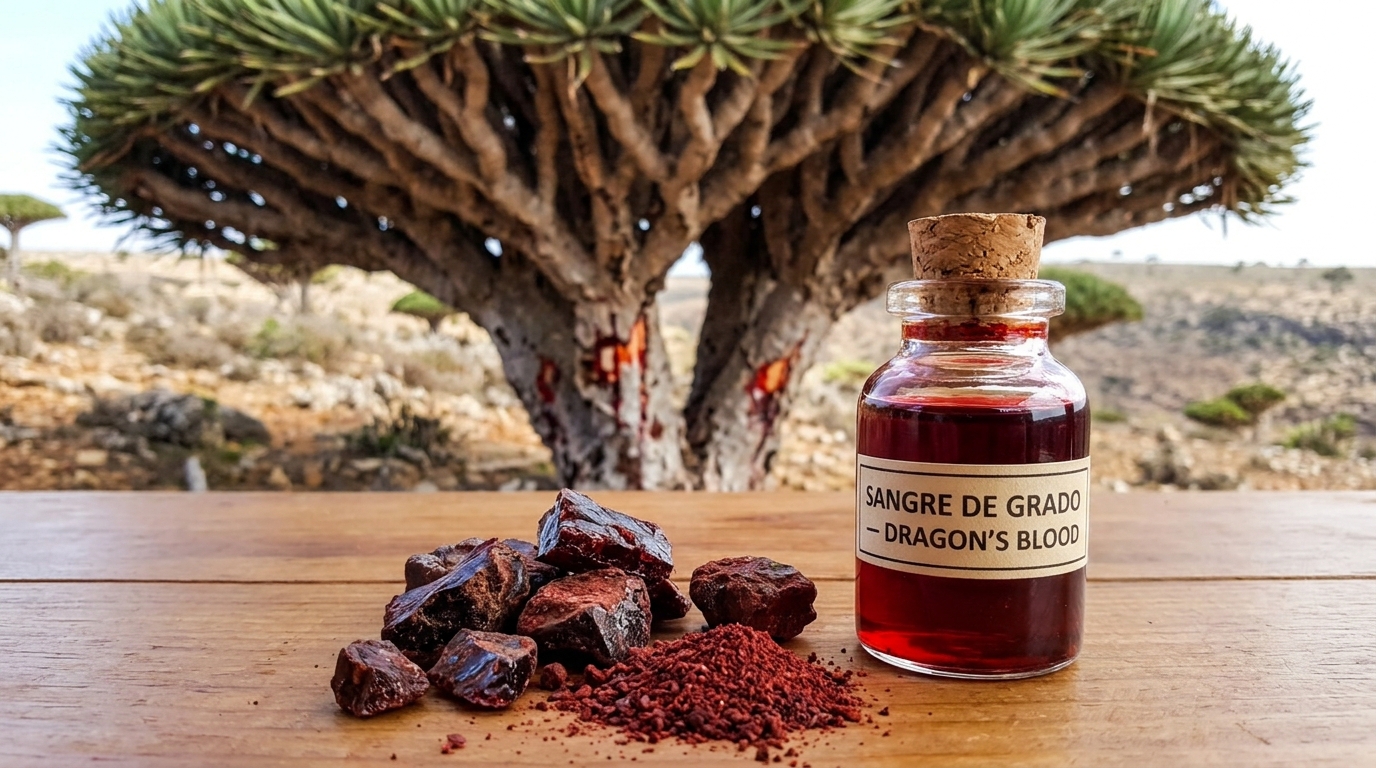
Dragon's Blood (Sangre de Grago)
Open cuts, insect bites, ulcers, skin rashes
Region
Amazon Basin
Tradition
Amazonian Indigenous tribes (Quechua, Mestizo)
Era
Pre-Columbian antiquity; documented 1600s
Science
Yes
Today
Widely Practiced Today
Instructions
Traditional logic
Blood-like resin acts as a natural liquid bandage to stop bleeding and protect wounds
Background & history
FACT-CHECK: origin & 1600s documentation (Spanish chronicler P. Bernabe Cobo) verified. Science corrected from 'Yes' to 'Partial' — crofelemer, a single isolated compound from this tree, is FDA-approved for antidiarrheal use, but pharmacology references describe clinical evidence for the traditional topical wound-healing use specifically as insufficient, despite some promising smaller studies.
Where it comes from
Amazon Basin
Community notes
Loading notes…
This is a historical and cultural reference, not medical advice. Many of these remedies have never been scientifically validated, and folk reasoning (humoral theory, “hot/cold” classifications, spiritual causation) reflects older explanatory traditions rather than modern medicine. Ratings reflect community opinion, not clinical evidence.
Related remedies for Open cuts, insect bites, ulcers, skin rashes
Honey for Wounds & Burns
Open wounds, burns, skin ulcers
Egypt · Mesopotamia
Aloe Vera
Burns, wounds, skin irritation, constipation
Africa · Arabian Peninsula
Moldy Bread / Mold Poultice
Infected wounds
Egypt · Australia · Central Asia · France