Back to explore
Respiratory & Cold

Onion Syrup / Onion Socks

Cough, congestion, general illness prevention
AilmentsCoughCongestionGeneral Wellness
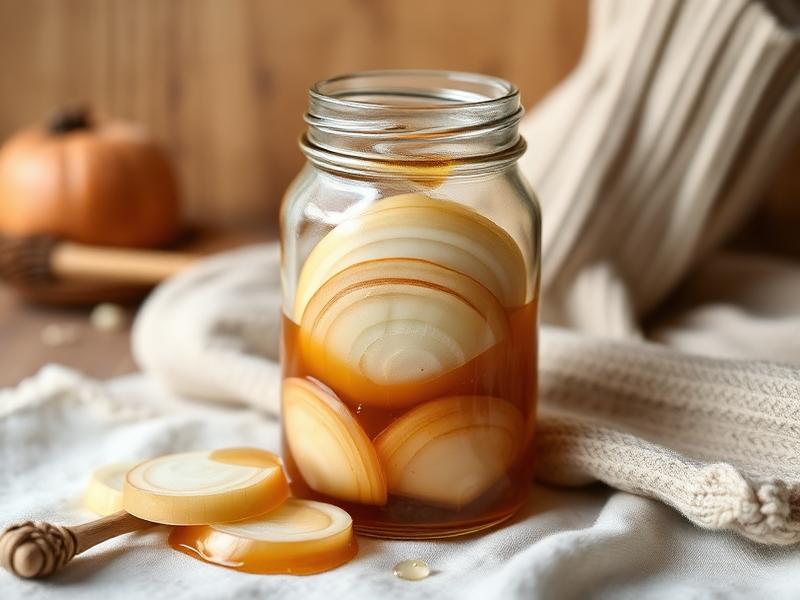
Onion Syrup / Onion Socks — traditional remedy ingredients
No ratings yet — be the first.

Region

Europe

Tradition

Pan-European folk medicine (Victorian-era codified)

Era

19th century, older oral roots

Science

Partial

Today

Niche / Regional

Instructions

Ingredients
Onion Syrup
Onion: 1 medium (yellow or red), thinly sliced
Raw honey: enough to fully cover the onion slices (about 1/2 to 1 cup)

Step-by-Step
Syrup
Layer: In a clean glass jar, alternate layers of thinly sliced onion and honey until the jar is full, making sure the onion is completely submerged.
Steep: Seal the jar and let it sit at room temperature for 6 to 24 hours (overnight is traditional) — the onion will release its juices into the honey.
Strain: Strain out the onion pieces, keeping the golden liquid syrup.
Store and use: Store the syrup in the refrigerator. Take 1 to 2 teaspoons as needed for cough relief.
Onion Sock / Room Method
Cut a raw onion in half or into quarters.
Place the cut onion in a clean sock, or simply set it cut-side up in a small dish in the sick person's bedroom overnight.
Discard the onion in the morning — it is not eaten in this variant.

Tips
Honey caution: not suitable for infants under 1 year old.
The "sock/room" method is a folk belief (the onion is thought to "absorb" germs); it is not medically supported the way the syrup's antibacterial onion-honey combination is.
Add a few slices of fresh ginger or garlic to the syrup jar for extra traditional cold-fighting power.

Traditional logic

Pungent sulfur compounds believed to loosen mucus; cut onion believed to 'absorb' germs

Background & history

Documented in 19th-century Western medical guides alongside garlic syrup. The 'absorbing germs' belief circulated widely in Depression-era American households, especially during flu outbreaks like 1918.

Where it comes from

Europe

Highlighted on the map: Russia, Norway, France, Sweden, Belarus, Ukraine, Poland, Austria, Hungary, Moldova, Romania, Lithuania and 26 more

Rate this remedy

No account needed. You can change your rating any time from this browser.

Tap to rate

This is a historical and cultural reference, not medical advice. Many of these remedies have never been scientifically validated, and folk reasoning (humoral theory, “hot/cold” classifications, spiritual causation) reflects older explanatory traditions rather than modern medicine. Ratings reflect community opinion, not clinical evidence.

Related remedies

Admin