Back to explore
Pain, Fever & Inflammation

Moxibustion / Mugwort

Chronic cold pain, menstrual cramps, joint stiffness
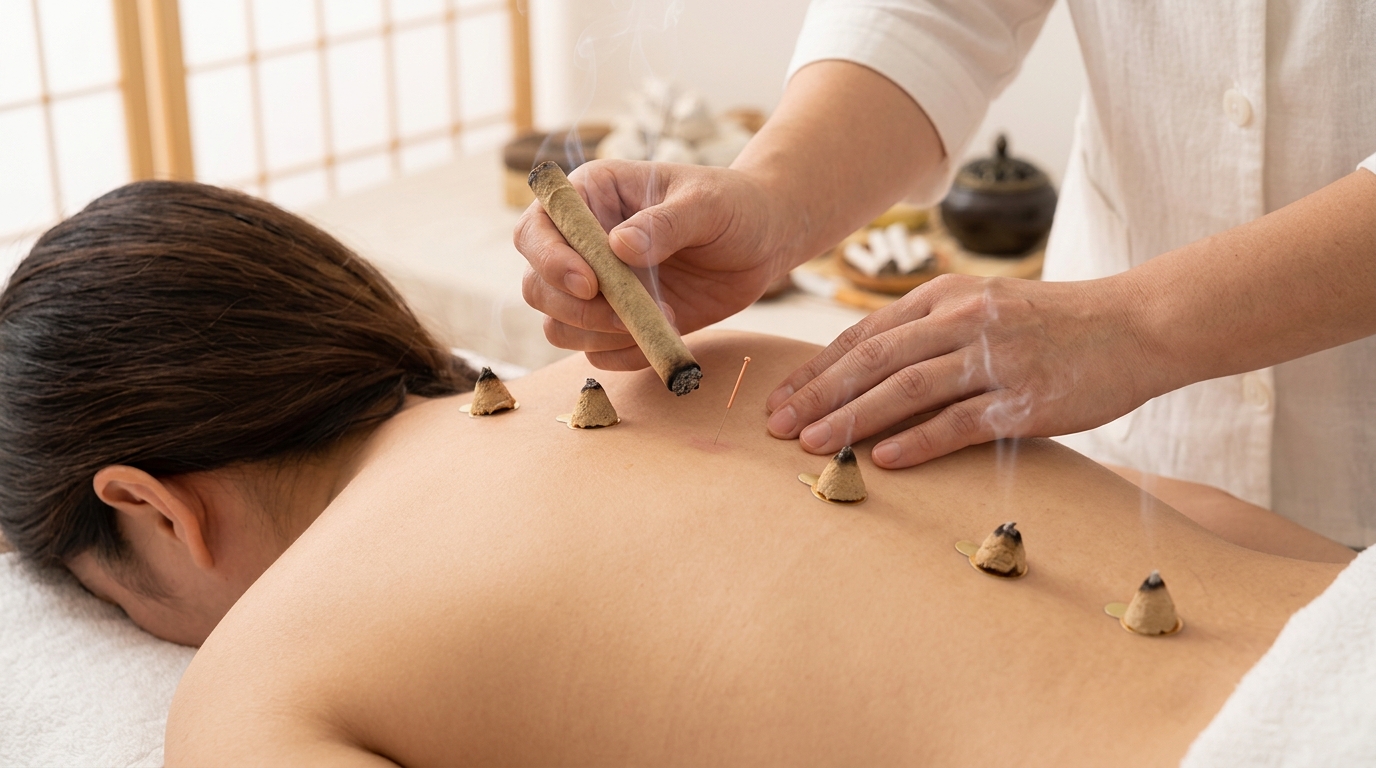
AilmentsChronic PainMenstrual CrampsJoint Stiffness
Moxibustion / Mugwort — traditional remedy ingredients
No ratings yet — be the first.

Region

East Asia

Tradition

Traditional Chinese Medicine / Hanbang / Kampo

Era

Pre-Han Dynasty (Huangdi Neijing, ~200 BCE)

Science

Partial

Today

Widely Practiced Today

Instructions

Ingredients
A moxa stick (compressed, aged mugwort)
A lighter or matches
A heatproof container with sand, salt, or rice (for extinguishing)

Step-by-Step
Indirect Method
Light the tip of the moxa stick until it glows red evenly across the tip.
Hold the burning end about 2 to 3 cm (about an inch) away from the skin over the target area — never touching the skin directly.
Move the stick in slow circles, or gently toward and away from the skin in a "pecking" motion, to prevent overheating any one spot.
Continue for 5 to 15 minutes, until the area feels warm and turns slightly pink — stop immediately if it feels hot or uncomfortable.
To extinguish, press the burning tip into your sand/salt/rice container until fully out. Never leave burning moxa unattended.

Tips
MODERN SAFETY NOTE: Traditional "direct" moxibustion (burning material placed directly on the skin) can cause real burns and scarring; the indirect method described above is the safer approach for home use, and is what's most commonly taught.
This is traditionally taught by a trained practitioner — consult a licensed acupuncturist before trying moxibustion for the first time, and never use it during pregnancy without professional guidance.
Ensure good ventilation, since moxa produces smoke.

Traditional logic

Warms meridians, expels Damp-Cold, and mobilizes stagnant Qi and blood

Background & history

FACT-CHECK: repaired from a column-misalignment error (both the category AND the Traditional Logic field had been split across extra columns by unescaped commas). History fully verified against the Huangdi Neijing.

Where it comes from

East Asia

Highlighted on the map: North Korea, South Korea, Mongolia, China, Taiwan, Japan

Rate this remedy

No account needed. You can change your rating any time from this browser.

Tap to rate

This is a historical and cultural reference, not medical advice. Many of these remedies have never been scientifically validated, and folk reasoning (humoral theory, “hot/cold” classifications, spiritual causation) reflects older explanatory traditions rather than modern medicine. Ratings reflect community opinion, not clinical evidence.

Related remedies

Admin