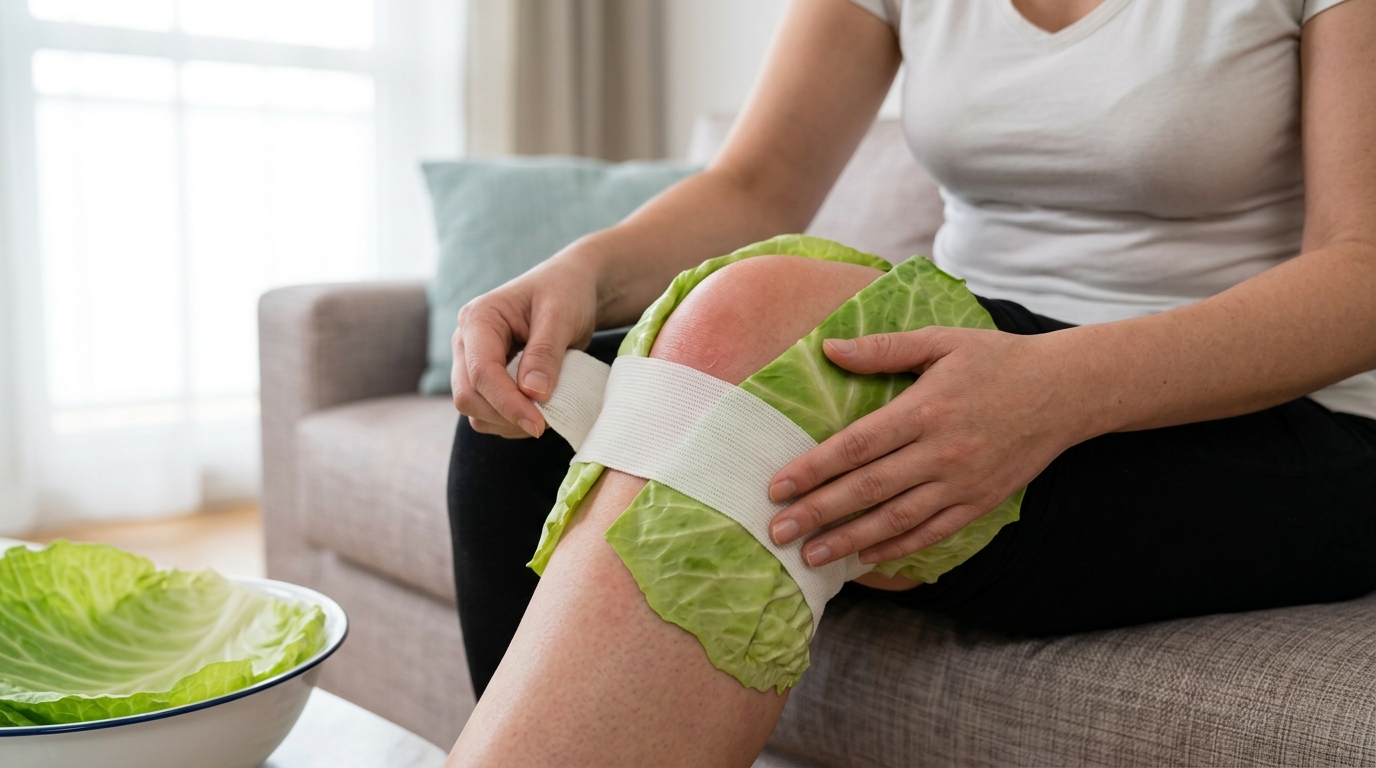
Cabbage Leaf Compress
Joint pain, mastitis/breast engorgement, localized swelling
Region
Eastern & Northern Europe
Tradition
Eastern European & Nordic folk traditions
Era
Long-standing agrarian folk tradition
Science
Partial
Today
Widely Practiced Today
Instructions
Traditional logic
Cooling plant believed to draw out excess fluid and localized heat/inflammation
Background & history
FACT-CHECK: use for mastitis/engorgement fully verified and still clinically studied today; specific 'Eastern European & Nordic' regional origin is plausible but sources describe it more broadly as general European folk practice. A meta-analysis found mixed results — comparable to hot/cold compress, though one review found no better than no treatment at all (engorgement often self-resolves).
Where it comes from
Eastern & Northern Europe
Community notes
Loading notes…
This is a historical and cultural reference, not medical advice. Many of these remedies have never been scientifically validated, and folk reasoning (humoral theory, “hot/cold” classifications, spiritual causation) reflects older explanatory traditions rather than modern medicine. Ratings reflect community opinion, not clinical evidence.
Related remedies for Joint pain, mastitis/breast engorgement, localized swelling
Sobada (Abdominal Massage)
Empacho, digestive blockage, musculoskeletal pain
Mexico
Hilot (Traditional Massage)
Muscle pain, colic, sprains, energy imbalance
Philippines
Arnica Tincture / Poultice
Bruises, sprains, muscle soreness, osteoarthritis pain
Europe