Back to explore
Respiratory & Cold

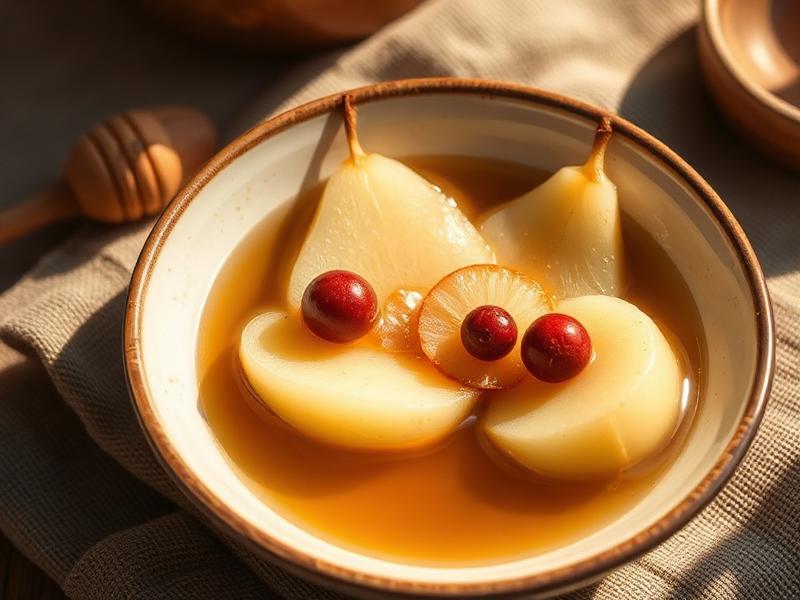
Baesuk (Steamed Pear with Honey & Ginger)

Cough, sore throat, chest congestion
AilmentsCoughSore ThroatChest Congestion
Baesuk (Steamed Pear with Honey & Ginger) — traditional remedy ingredients
No ratings yet — be the first.

Region

Korea

Tradition

Traditional Korean Medicine (Hanbang)

Era

Recorded in Donguibogam, 1613 CE

Science

Partial

Today

Widely Practiced Today

Instructions

Ingredients
1 Asian pear (or substitute a Bosc pear or apple)
Honey: 2 to 3 tablespoons
Fresh ginger: a few slices (about 1 tablespoon)
Whole black peppercorns: 5 to 8
Optional: a cinnamon stick, a few jujubes (dried dates), pine nuts

Step-by-Step
Prepare the pear: rinse the pear, then slice about 1 inch off the top to create a "lid." Use a spoon to scoop out the core and seeds, creating a hollow well in the center.
Fill: fill the hollow with honey, ginger slices, and the peppercorns (and jujubes/cinnamon if using).
Replace the lid on top of the pear.
Steam: place the filled pear in a steamer and steam until the flesh is soft when pierced with a fork (about 30 to 45 minutes depending on pear size).
Serve: let cool slightly, then serve the whole pear warm, along with the syrupy liquid that collects in the bowl at the bottom.

Tips
Alternative "poached" method: instead of steaming the pear whole, slice it into wedges and simmer directly in a pot of water with sliced ginger and honey for a drinkable tonic version.
Traditionally served warm to someone with a cold, but also enjoyed cold as a dessert.
Remove the peppercorns before eating, or warn the person they're inside, since biting into one is a surprise.

Traditional logic

Believed to 'release chest congestion and reduce internal hotness' of a cold

Background & history

no further information

Where it comes from

Korea

Highlighted on the map: North Korea, South Korea

Rate this remedy

No account needed. You can change your rating any time from this browser.

Tap to rate

This is a historical and cultural reference, not medical advice. Many of these remedies have never been scientifically validated, and folk reasoning (humoral theory, “hot/cold” classifications, spiritual causation) reflects older explanatory traditions rather than modern medicine. Ratings reflect community opinion, not clinical evidence.

Related remedies

Admin