AilmentsFright Sickness (Susto)Evil Eye (Mal de Ojo)Sunken Fontanelle
No community notes yet — be the first.
Region
Mexico / Latin America
Tradition
Curanderismo
Era
Pre-Columbian roots blended with Spanish humoral medicine post-1500s
Science
Untested
Today
Widely Practiced Today
Instructions
Susto ("Soul Fright")
Ingredients
A fresh, unbroken egg, at room temperature
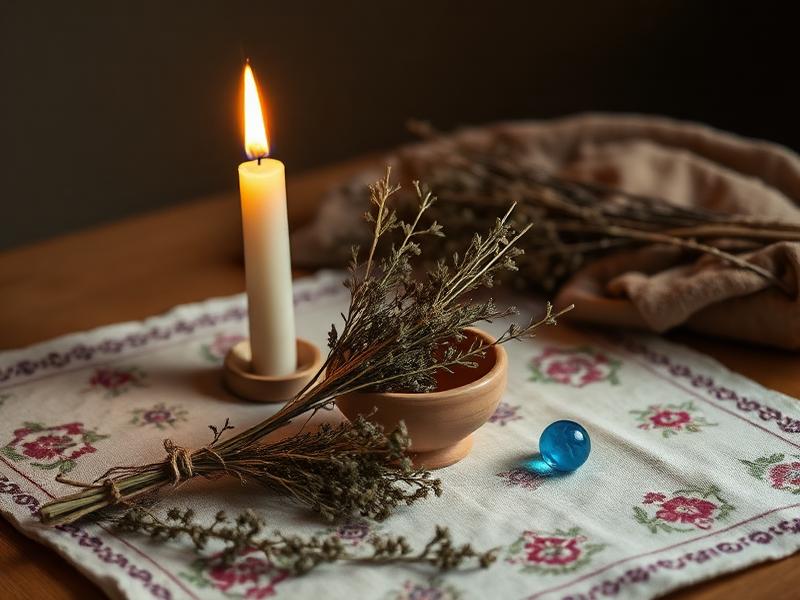
A bundle of fresh herbs, often ruda (rue), romero (rosemary), or albahaca (basil)
A clear glass of water
Step-by-Step
as practiced by a curandero/a
The curandero/a prays over the person, then sweeps a bundle of fresh herbs over their body from head to toe (a barrida, or "sweeping").
An unbroken egg is then rolled or rubbed slowly over the body, from the head downward, while prayers continue.
The egg is cracked into a glass of water, and the curandero/a reads the shapes formed to confirm the presence of susto and assess its severity.
The ritual is often repeated for three consecutive days to fully call the frightened spirit back to the body.
Tips
This is a spiritual/ritual practice performed by a trained curandero/a, not a self-administered technique.
The herbs used (ruda, romero, albahaca) are also placed in the home, or sometimes brewed as a calming tea, alongside the ritual.
Susto symptoms — persistent anxiety, insomnia, appetite loss — also warrant evaluation by a doctor or mental health professional, particularly if they persist.
Mal de Ojo ("Evil Eye")
Ingredients
A fresh, unbroken egg
A clear glass of water
Step-by-Step
If known, the adult believed to have caused the mal de ojo is asked to touch the child (traditionally passing a hand over the child's forehead) — this "completing the connection" is believed to prevent or resolve the condition on its own.
If this isn't possible, a curandero/a rubs the unbroken egg gently over the child's body while reciting prayers.
The egg is cracked into a glass of water; a shape resembling an eye is read as confirmation of the diagnosis.
A protective charm, commonly a red bracelet or ribbon, is often placed on the child afterward as prevention against future episodes.
Tips
This is a ritual practice, generally performed on infants and young children, by a trusted family member or curandero/a.
If a child has a persistent fever, inconsolable crying, or fussiness, these are also common symptoms of illnesses that need a pediatrician's evaluation.
Mollera Caída ("Fallen Fontanelle")
Ingredients
Historical accounts describe curanderos/as using gentle manual techniques believed to help the fontanelle return to place, generally including light upward pressure on the roof of the infant's mouth (palate) and a warm oil massage to the head.
Step-by-Step
IMPORTANT SAFETY NOTE — no step-by-step provided
Some historically documented variants of this practice include far more dangerous physical maneuvers, including holding an infant upside down by the ankles, or, in at least one published medical case report, immersing an infant's head in hot water. These carry a real risk of serious injury to a baby and have been mistaken for child abuse in the medical literature. We are deliberately not providing detailed step-by-step instructions for this remedy given those documented risks.
A sunken fontanelle in a real infant is a recognized medical sign of dehydration. If you notice this in a baby, the safe response is to contact a pediatrician or seek medical care promptly — not to attempt a home manual technique.
Tips
This entry is documented for historical/cultural understanding only.
Researchers who study this practice specifically recommend that any traditional response be paired with, not substituted for, professional rehydration therapy.
Traditional logic
Illness understood as combined physical/emotional/spiritual imbalance
Background & history
Susto ("Soul Fright")
One of curanderismo's three classically named folk illnesses (with Mal de Ojo and Mollera Caída), diagnosed within a system that also includes sobadores (massage), yerberos (herbalists), espiritualistas (spiritual healers), and hueseros (bone-setters).
Mal de Ojo ("Evil Eye")
Prevention traditionally involves the admiring adult touching the child to 'complete the connection' and avoid triggering it. Part of the same broader curanderismo system as Susto and Mollera Caída.
Mollera Caída ("Fallen Fontanelle")
Modern pediatric medicine notes a sunken fontanelle can also signal dehydration; curanderismo's folk explanation and treatment developed independently of this biomedical understanding.
Where it comes from
Mexico / Latin America
Highlighted on the map: Argentina, Chile, Haiti, Dominican Rep., Bahamas, Falkland Is., Mexico, Uruguay, Brazil, Bolivia, Peru, Colombia and 16 more
Community notes
No ratings yet
Loading notes…
This is a historical and cultural reference, not medical advice. Many of these remedies have never been scientifically validated, and folk reasoning (humoral theory, “hot/cold” classifications, spiritual causation) reflects older explanatory traditions rather than modern medicine. Ratings reflect community opinion, not clinical evidence.
Related remedies for Fright-sickness, 'evil eye', sunken infant fontanelle